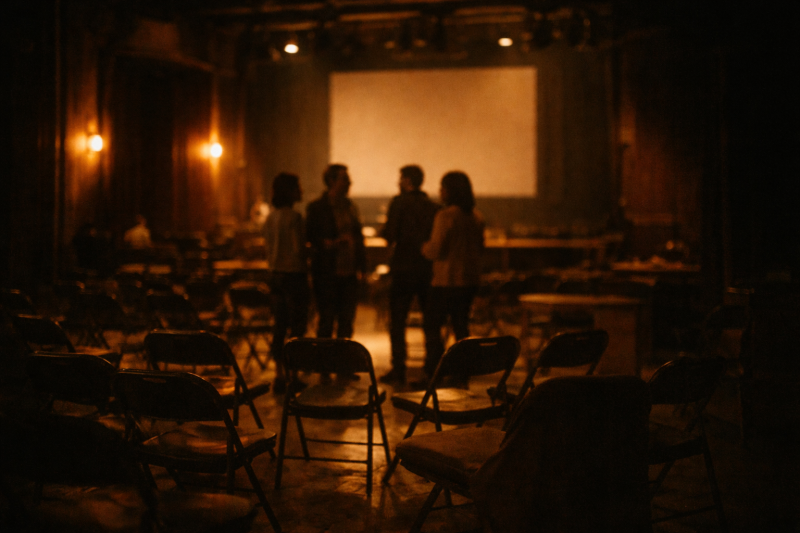
The most meaningful live culture is rarely just about one night.
What people are really responding to is not only the line up, the venue, or the programme. They are responding to the possibility of return.
Return to a feeling.
Return to a kind of room.
Return to a version of themselves that feels more awake there.
Return to community, ritual, recognition, or surprise.
This is part of why certain spaces become beloved even when they are not the slickest, biggest, or best funded. People do not only attend them for content. They attend them because something in the room keeps calling them back.
That call to return is one of the most underused assets in audience strategy.
A lot of cultural marketing still treats attendance as a one off conversion problem. How do we get people to this date, this launch, this programme, this show?
That matters, of course. But if the work is live, communal, and recurring, the deeper question is different:
What makes someone return?
What builds trust over time?
What helps a first timer become a regular?
What turns resonance into relationship?
These questions matter because live culture is cumulative. People often need more than one encounter to fully locate themselves in a space. The first visit may be curiosity. The second may be trust. The third may be belonging. After that, they may start bringing other people.
That means audience growth is not only about reach. It is about continuity.
The most effective spaces often do a few things well, whether intentionally or not.
They create a recognisable feeling.
They help people know what kind of room they are entering.
They make the threshold less intimidating.
They give audiences language to describe the experience to others.
They leave behind enough emotional residue that return feels desirable, not effortful.
This is especially important in culturally specific, diasporic, underground, or spiritually charged spaces. These are often the rooms people have been looking for without knowing how to name them. When they find them, the stakes are higher than a casual night out. The experience can feel like recognition, relief, or homecoming.
That is why repeat attendance in these spaces is not just a marketing metric. It is a sign that something real is happening.
The strategic question then becomes:
How do we support that return more intentionally?
Not by over engineering the work.
Not by flattening mystery.
But by building better pathways around what is already resonant.
That may mean clearer invitation.
Stronger follow up.
Better partner routes.
More recognisable event framing.
A gentler threshold for first timers.
A stronger rhythm of communication between dates.
Live culture becomes stronger when it is not only experienced, but re encountered.
And the organisations that understand this can build something far more durable than one successful event.
They can build an audience that comes back.